

曜析生物科技有限公司

DR5 Antibody
具体的参考文献 (1) RMB 10000(报价是含税价格)
Description:Rabbit polyclonal antibody to DR5
Application:WB IHC
Reactivity:DR5 Antibody detects endogenous levels of total DR5.
Conjugate:Human
Isotype:Rabbit
DR5 Antibody

    产品名称

    DR5 Antibody

    宿主

    Rabbit

    特异性

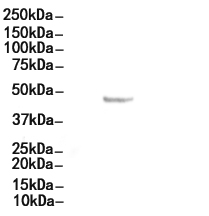
    DR5 Antibody detects endogenous levels of total DR5.

    经测试应用

    适用于:WB IHC

    种属反应性

    与反应:Human
    预测可用于:

    保存

    Rabbit IgG in phosphate buffered saline , pH 7.4, 150mM NaCl, 0.02% sodium azide and 50% glycerol. Store at -20 °C. Stable for 12 months from date of receipt.

    描述

    The tumor necrosis factor receptor family, which includes TNF-RI, Fas, DR3, DR4, DR5, and DR6, plays an important role in the regulation of apoptosis in various physiological systems . The receptors are activated by a family of cytokines that include TNF, FasL, and TRAIL. They are characterized by a highly conserved extracellular region containing cysteine-rich repeats and a conserved intracellular region of about 80 amino acids termed the death domain (DD). The DD is important for transducing the death signal by recruiting other DD containing adaptor proteins (FADD, TRADD, RIP) to the death-inducing signaling complex (DISC), resulting in activation of caspases. DR5 is a receptor for TNF-related apoptosis inducing ligand (TRAIL), which has been been shown to induce apoptosis in variety of cell types and has been targeted for cancer therapy. Structurally, DR5 contains an amino-terminal leader cleavage site followed by an extracellular region containing two cysteine-rich repeats, then a central transmembrane domain and a carboxy-terminal death domain. DR5 is expressed in a wide variety of tissues and is transcriptional target for p53 . It induces apoptosis through a FADD-dependent pathway. Deletion of DR5 leads to resistance in TRAIL-mediated apoptosis as well as an abrogated response to DNA-damaging stimuli .

    产品名称

    DR5 Antibody

    宿主

    Rabbit

    特异性

    DR5 Antibody detects endogenous levels of total DR5.

    经测试应用

    适用于:WB IHC

    种属反应性

    与反应:Human
    预测可用于:

    保存

    Rabbit IgG in phosphate buffered saline , pH 7.4, 150mM NaCl, 0.02% sodium azide and 50% glycerol. Store at -20 °C. Stable for 12 months from date of receipt.

    描述

    The tumor necrosis factor receptor family, which includes TNF-RI, Fas, DR3, DR4, DR5, and DR6, plays an important role in the regulation of apoptosis in various physiological systems . The receptors are activated by a family of cytokines that include TNF, FasL, and TRAIL. They are characterized by a highly conserved extracellular region containing cysteine-rich repeats and a conserved intracellular region of about 80 amino acids termed the death domain (DD). The DD is important for transducing the death signal by recruiting other DD containing adaptor proteins (FADD, TRADD, RIP) to the death-inducing signaling complex (DISC), resulting in activation of caspases. DR5 is a receptor for TNF-related apoptosis inducing ligand (TRAIL), which has been been shown to induce apoptosis in variety of cell types and has been targeted for cancer therapy. Structurally, DR5 contains an amino-terminal leader cleavage site followed by an extracellular region containing two cysteine-rich repeats, then a central transmembrane domain and a carboxy-terminal death domain. DR5 is expressed in a wide variety of tissues and is transcriptional target for p53 . It induces apoptosis through a FADD-dependent pathway. Deletion of DR5 leads to resistance in TRAIL-mediated apoptosis as well as an abrogated response to DNA-damaging stimuli .

    产品名称

    DR5 Antibody

    宿主

    Rabbit

    特异性

    DR5 Antibody detects endogenous levels of total DR5.

    经测试应用

    适用于:WB IHC

    种属反应性

    与反应:Human
    预测可用于:

    保存

    Rabbit IgG in phosphate buffered saline , pH 7.4, 150mM NaCl, 0.02% sodium azide and 50% glycerol. Store at -20 °C. Stable for 12 months from date of receipt.

    描述

    The tumor necrosis factor receptor family, which includes TNF-RI, Fas, DR3, DR4, DR5, and DR6, plays an important role in the regulation of apoptosis in various physiological systems . The receptors are activated by a family of cytokines that include TNF, FasL, and TRAIL. They are characterized by a highly conserved extracellular region containing cysteine-rich repeats and a conserved intracellular region of about 80 amino acids termed the death domain (DD). The DD is important for transducing the death signal by recruiting other DD containing adaptor proteins (FADD, TRADD, RIP) to the death-inducing signaling complex (DISC), resulting in activation of caspases. DR5 is a receptor for TNF-related apoptosis inducing ligand (TRAIL), which has been been shown to induce apoptosis in variety of cell types and has been targeted for cancer therapy. Structurally, DR5 contains an amino-terminal leader cleavage site followed by an extracellular region containing two cysteine-rich repeats, then a central transmembrane domain and a carboxy-terminal death domain. DR5 is expressed in a wide variety of tissues and is transcriptional target for p53 . It induces apoptosis through a FADD-dependent pathway. Deletion of DR5 leads to resistance in TRAIL-mediated apoptosis as well as an abrogated response to DNA-damaging stimuli .

    产品名称

    DR5 Antibody

    宿主

    Rabbit

    特异性

    DR5 Antibody detects endogenous levels of total DR5.

    经测试应用

    适用于:WB IHC

    种属反应性

    与反应:Human
    预测可用于:

    保存

    Rabbit IgG in phosphate buffered saline , pH 7.4, 150mM NaCl, 0.02% sodium azide and 50% glycerol. Store at -20 °C. Stable for 12 months from date of receipt.

    描述

    The tumor necrosis factor receptor family, which includes TNF-RI, Fas, DR3, DR4, DR5, and DR6, plays an important role in the regulation of apoptosis in various physiological systems . The receptors are activated by a family of cytokines that include TNF, FasL, and TRAIL. They are characterized by a highly conserved extracellular region containing cysteine-rich repeats and a conserved intracellular region of about 80 amino acids termed the death domain (DD). The DD is important for transducing the death signal by recruiting other DD containing adaptor proteins (FADD, TRADD, RIP) to the death-inducing signaling complex (DISC), resulting in activation of caspases. DR5 is a receptor for TNF-related apoptosis inducing ligand (TRAIL), which has been been shown to induce apoptosis in variety of cell types and has been targeted for cancer therapy. Structurally, DR5 contains an amino-terminal leader cleavage site followed by an extracellular region containing two cysteine-rich repeats, then a central transmembrane domain and a carboxy-terminal death domain. DR5 is expressed in a wide variety of tissues and is transcriptional target for p53 . It induces apoptosis through a FADD-dependent pathway. Deletion of DR5 leads to resistance in TRAIL-mediated apoptosis as well as an abrogated response to DNA-damaging stimuli .

    产品名称

    DR5 Antibody

    宿主

    Rabbit

    特异性

    DR5 Antibody detects endogenous levels of total DR5.

    经测试应用

    适用于:WB IHC

    种属反应性

    与反应:Human
    预测可用于:

    保存

    Rabbit IgG in phosphate buffered saline , pH 7.4, 150mM NaCl, 0.02% sodium azide and 50% glycerol. Store at -20 °C. Stable for 12 months from date of receipt.

    描述

    The tumor necrosis factor receptor family, which includes TNF-RI, Fas, DR3, DR4, DR5, and DR6, plays an important role in the regulation of apoptosis in various physiological systems . The receptors are activated by a family of cytokines that include TNF, FasL, and TRAIL. They are characterized by a highly conserved extracellular region containing cysteine-rich repeats and a conserved intracellular region of about 80 amino acids termed the death domain (DD). The DD is important for transducing the death signal by recruiting other DD containing adaptor proteins (FADD, TRADD, RIP) to the death-inducing signaling complex (DISC), resulting in activation of caspases. DR5 is a receptor for TNF-related apoptosis inducing ligand (TRAIL), which has been been shown to induce apoptosis in variety of cell types and has been targeted for cancer therapy. Structurally, DR5 contains an amino-terminal leader cleavage site followed by an extracellular region containing two cysteine-rich repeats, then a central transmembrane domain and a carboxy-terminal death domain. DR5 is expressed in a wide variety of tissues and is transcriptional target for p53 . It induces apoptosis through a FADD-dependent pathway. Deletion of DR5 leads to resistance in TRAIL-mediated apoptosis as well as an abrogated response to DNA-damaging stimuli .

服务热线

15852701687

扫一扫,在线咨询